Lisha Jichuan - USA/China
Lisha Jichuan
Designer biography:
Lisha Jichuan is a contemporary jewelry artist whose practice moves between object, body, and perception. Her work considers value not as a fixed attribute but as something constructed through materials, context, and the act of looking. Working at the intersection of fine jewelry and sculptural form, she engages with tensions between the precious and the ordinary, the natural and the fabricated. Materials are not treated as stable or hierarchical, but as mutable elements capable of transformation, disruption, and redefinition. Since 2011, Jichuan has worked as a jewelry designer and artist. Trained initially in visual communication design, she brings a research-based and concept-driven approach to her practice. She received her Bachelor’s degree in Jewelry Design from the China Central Academy of Fine Arts and her Master of Arts in Jewelry from the Savannah College of Art and Design. Her pieces often emerge through processes of material experimentation, where surface, structure, and composition evolve intuitively. Through subtle contrasts and unexpected juxtapositions, her work invites close attention, asking the viewer to reconsider what is seen, what is felt, and ultimately, what is valued.
Collection concept:
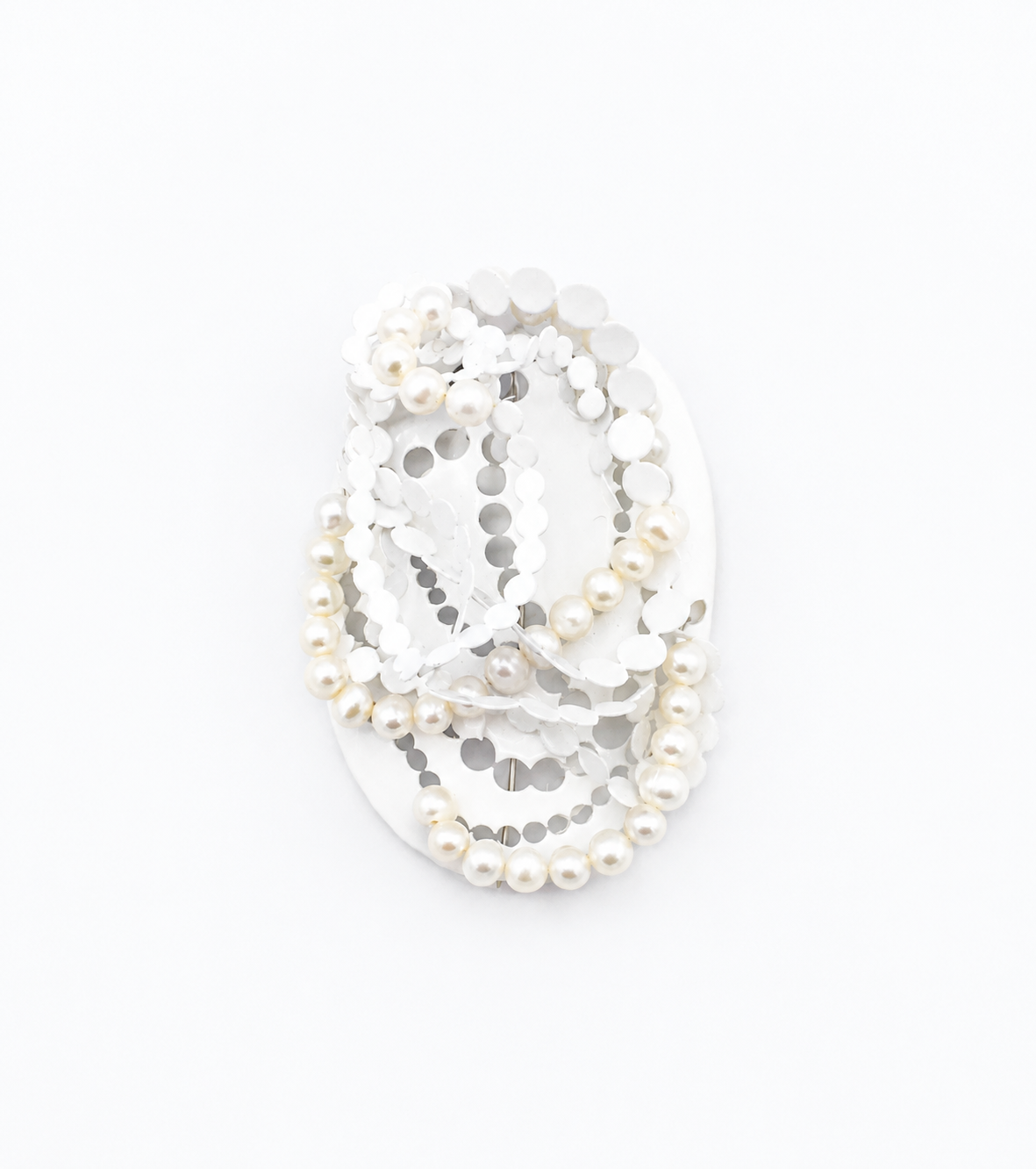
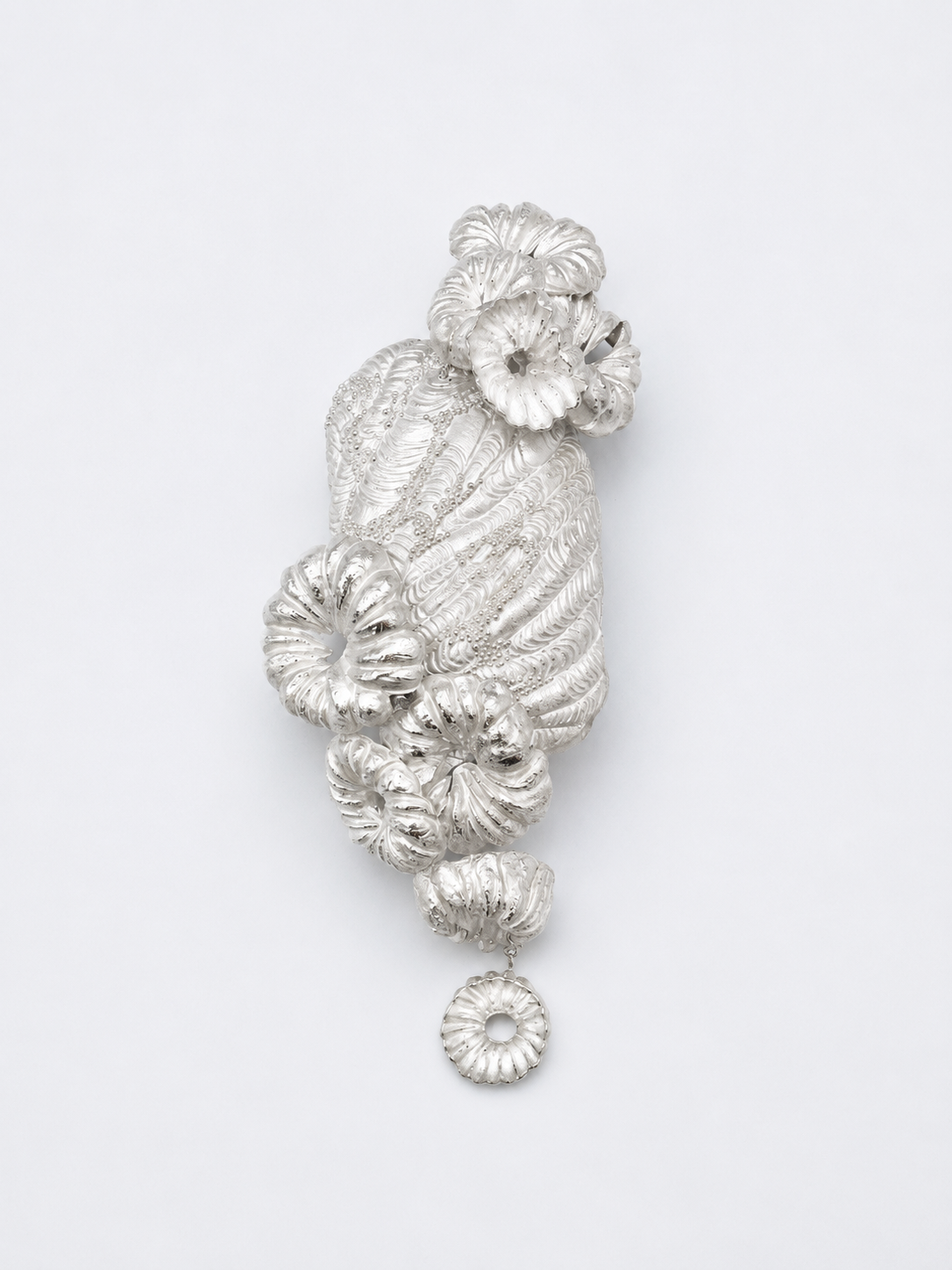
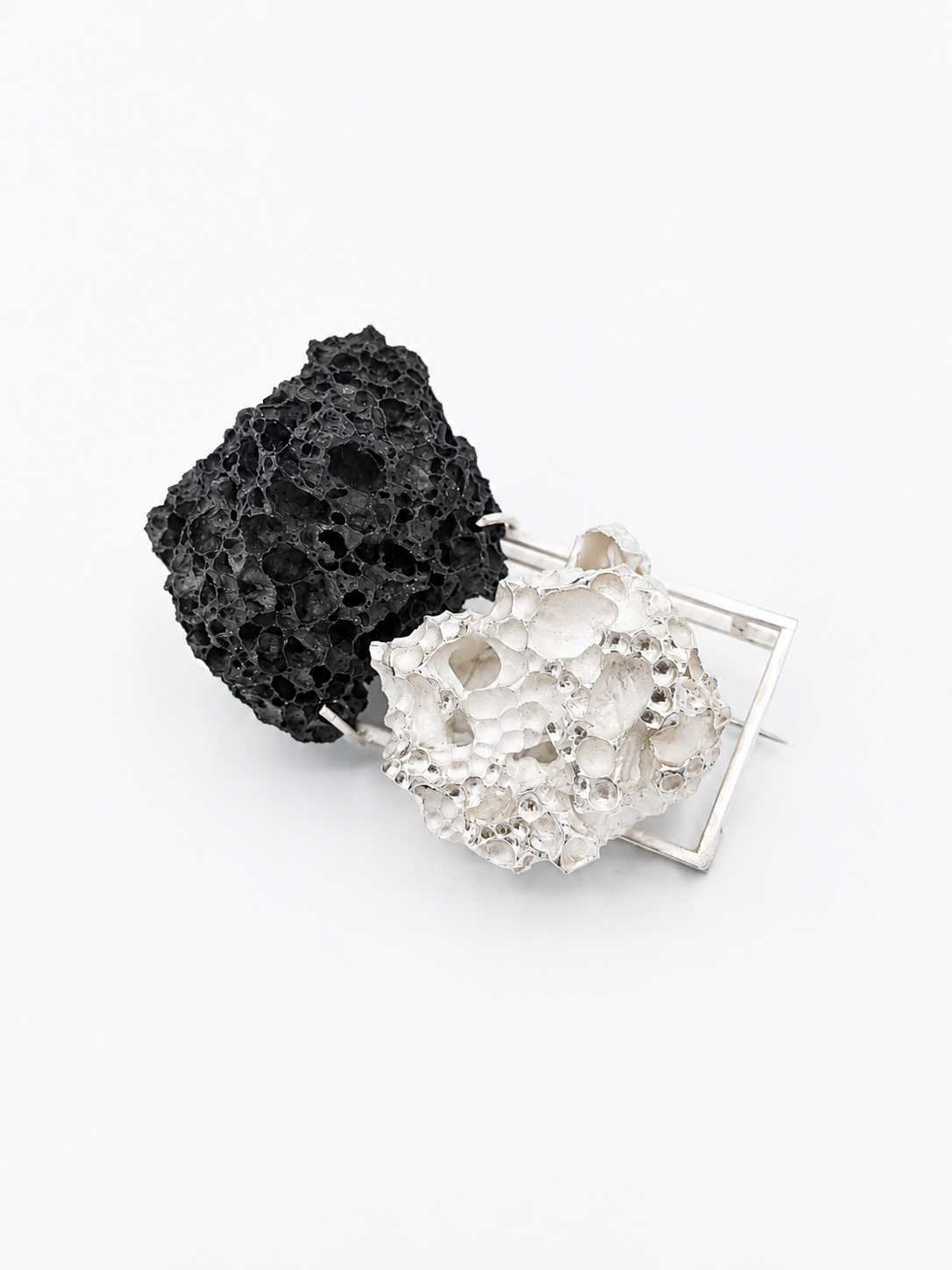
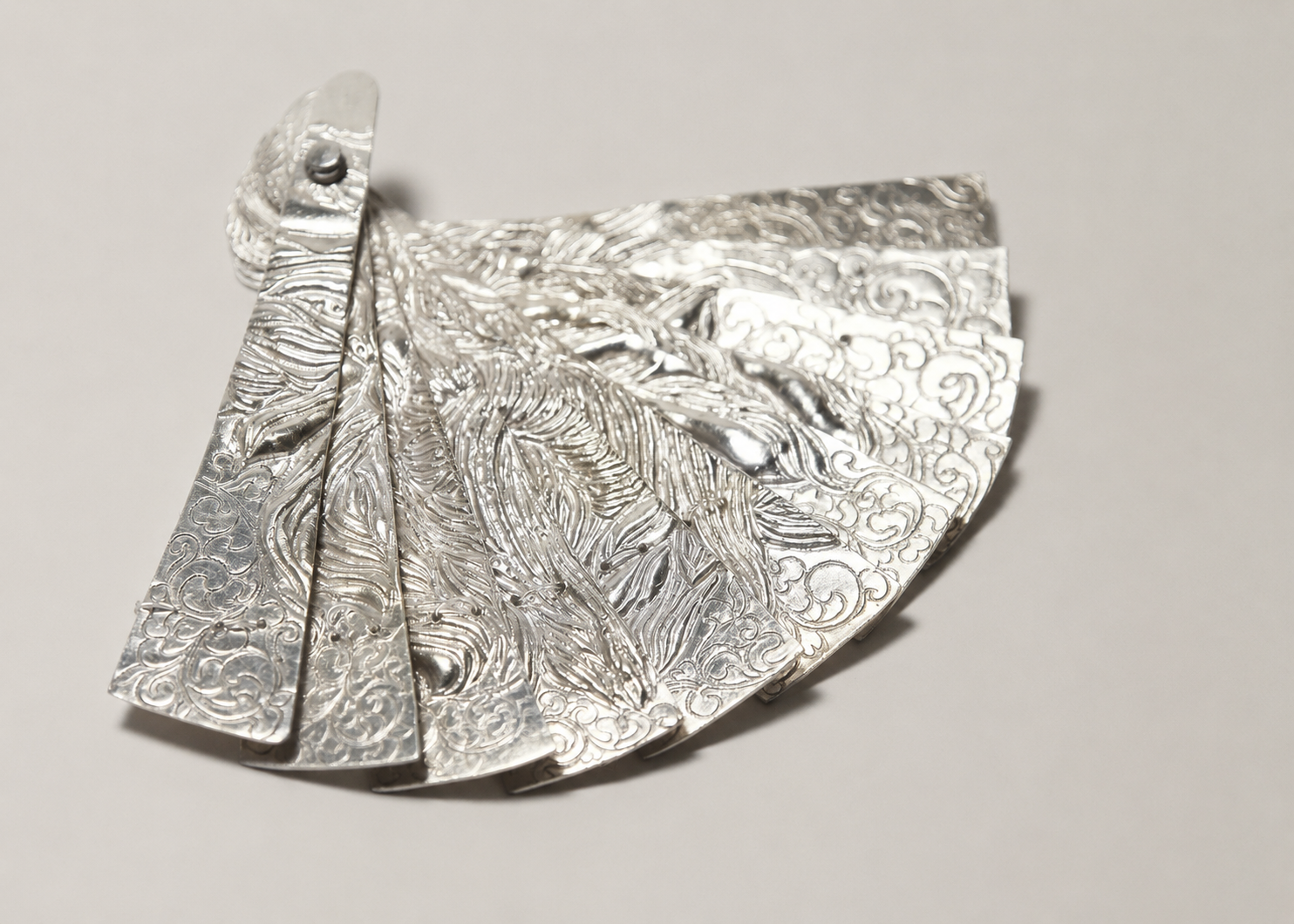
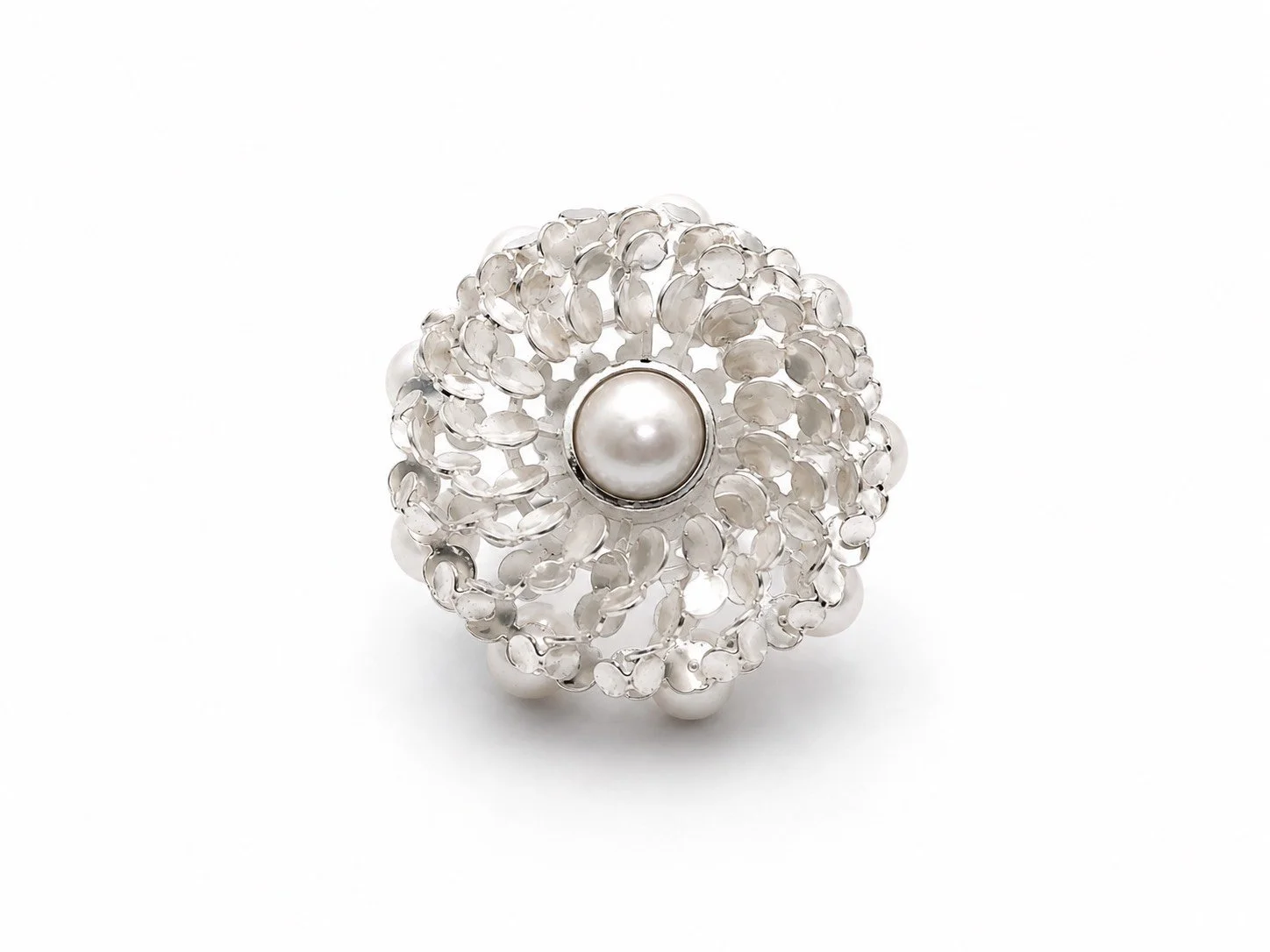
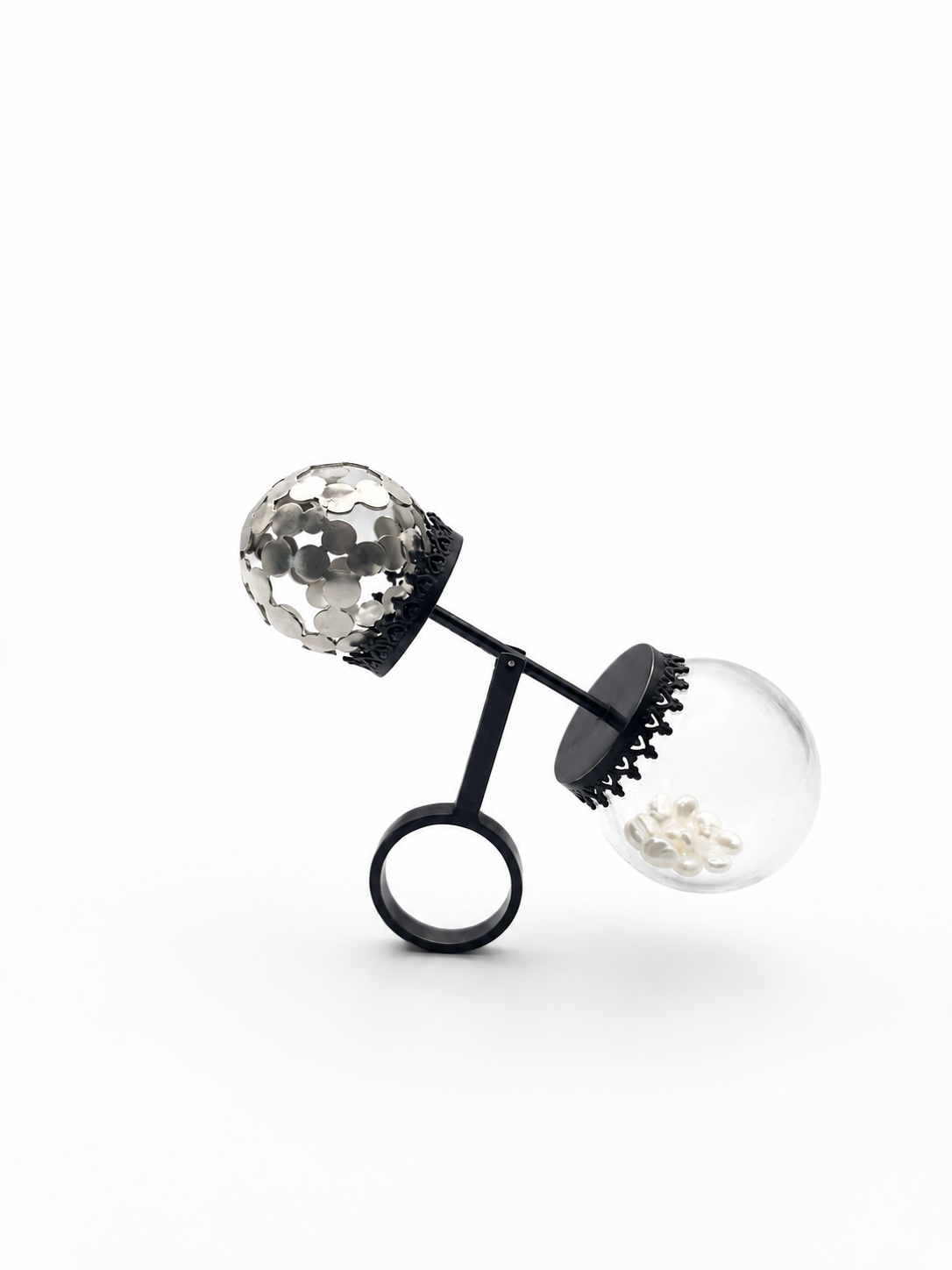
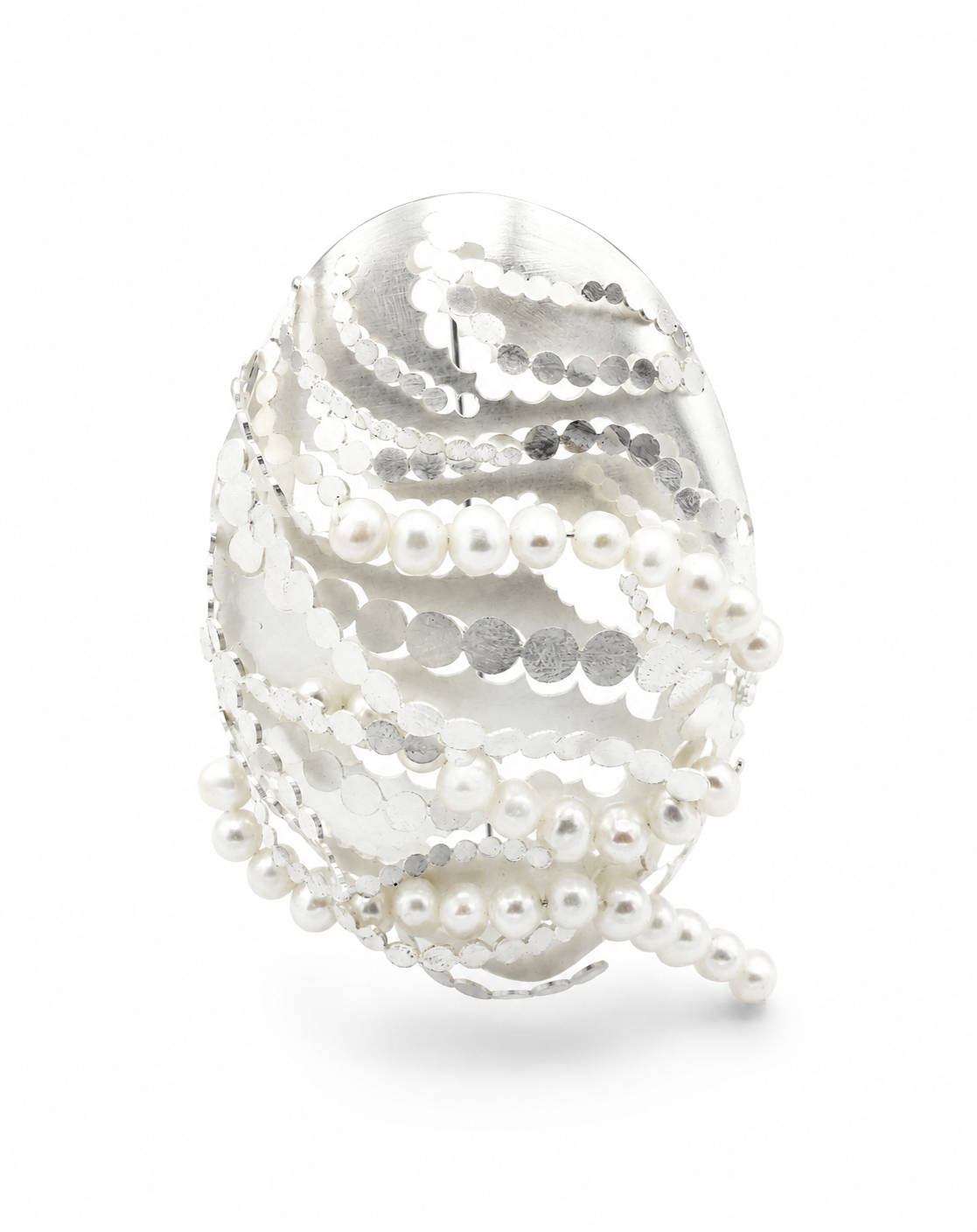
The Original Copy explores the unstable boundaries between authenticity and imitation. Through acts of duplication, reconstruction, and mimicry, familiar objects are removed from their original contexts and transformed into ambiguous forms that resist immediate recognition. Grounded in the belief that nature is the original artist, the work reflects on how human intervention, through making, memory, and perception, continually reshapes meaning and assigns value. Using found objects, mixed media, and traditional goldsmithing techniques such as casting, chasing, and repoussé, the pieces reverse material expectations, allowing the precious and the ordinary to exchange roles. Familiar jewelry archetypes, including pearl necklaces and engagement rings, are fragmented and reimagined, revealing how cultural inheritance and personal experience inform our understanding of authenticity.By engaging both visual and tactile senses, the collection invites viewers into a space of uncertainty where distinctions between real and fake begin to dissolve, and value emerges as something fluid, subjective, and continuously renegotiated.