Yuze Pan - UK
Yuze Pan
Designer biography:
Yuze Pan, born in Heilongjiang in 2001, graduated from the Metal Craft and Jewelry Studio at Central Academy of Fine Arts and is currently pursuing a Master's degree in Jewellery & Metal at the Royal College of Art. His creative practice focuses on applied arts, deeply exploring the characteristics of various metal materials and their extended meanings. Core creative concepts revolve around themes of boundaries, binary, and space transformation. The artist’s creative practice begins with observations of his surrounding environment, through which he explores potential connections between cultures, between people and objects, and between events. Within this process, the environment not only provides creative inspiration but also influences the artist himself. If the artwork is viewed as a three-dimensional spatial medium, the artist serves both as an external creator and as an internal constituent element. He utilizes this interwoven creative state, along with his sensitive perception of the environment and abstract integrative abilities, to transform real experiences into artworks with a distinctive aesthetic language. In 2026, he was awarded a Bronze Award in the Conceptual Jewellery category at the Goldsmiths’ Craft & Design Council Awards.
Collection concept:
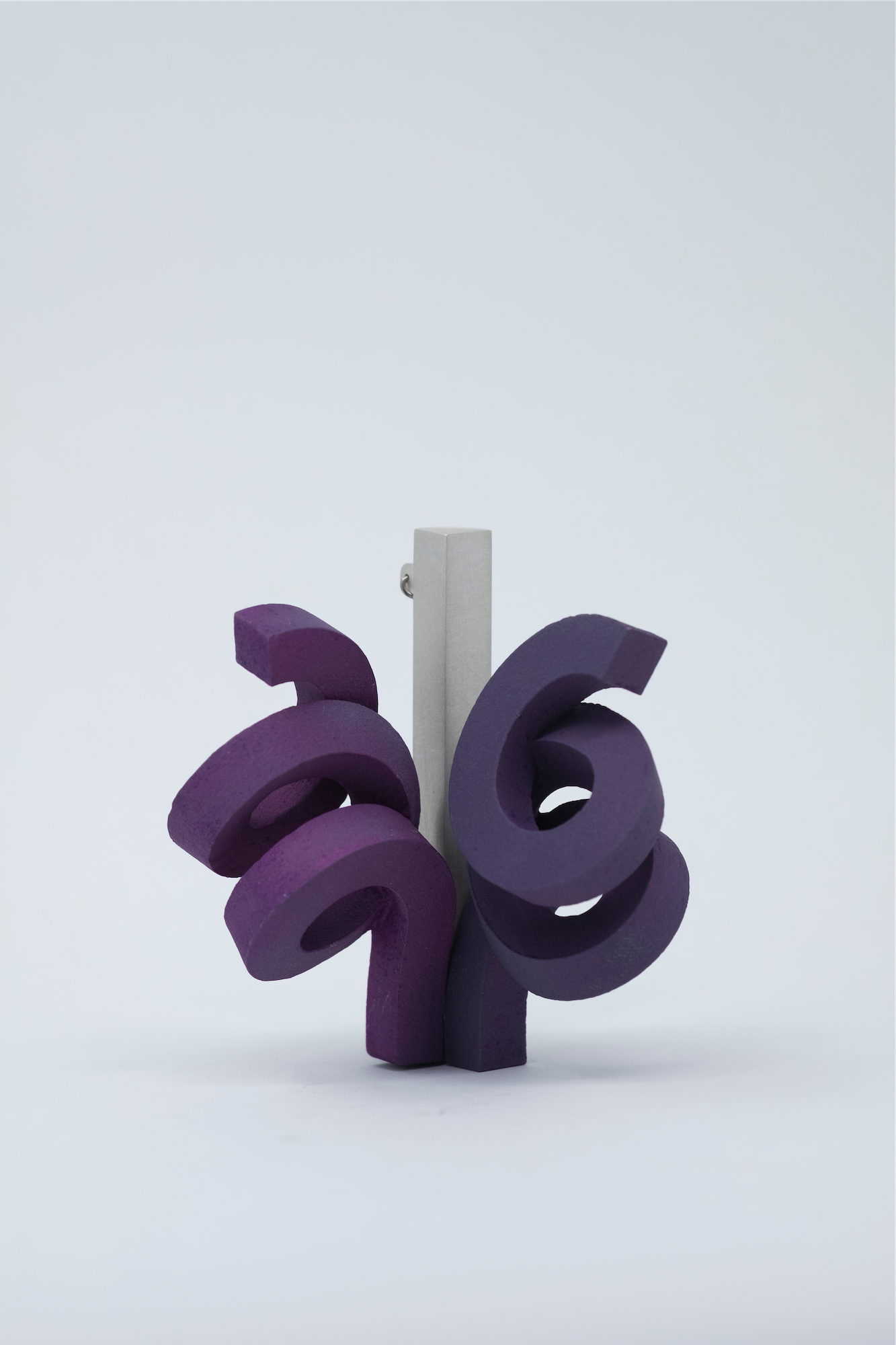
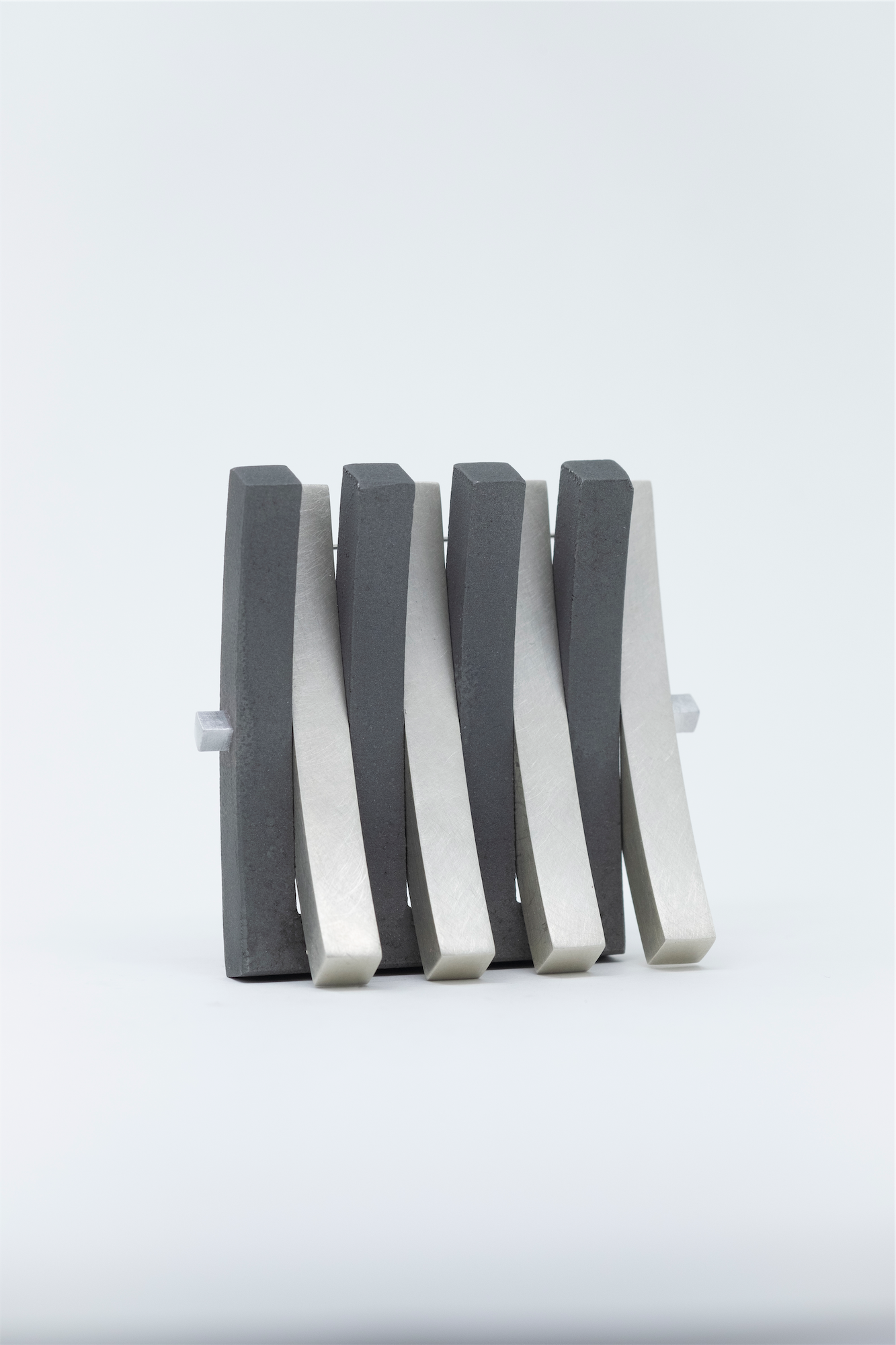
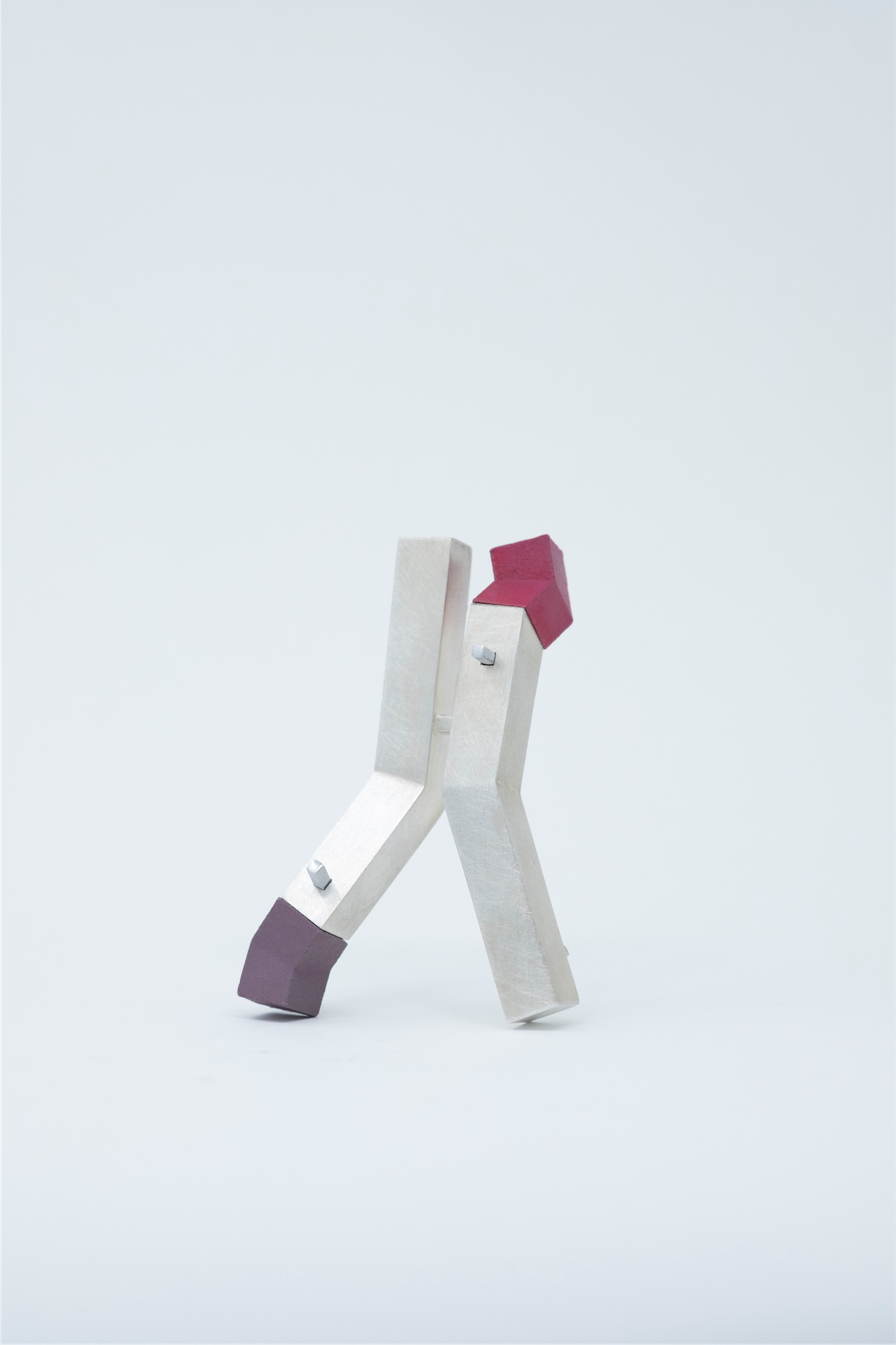
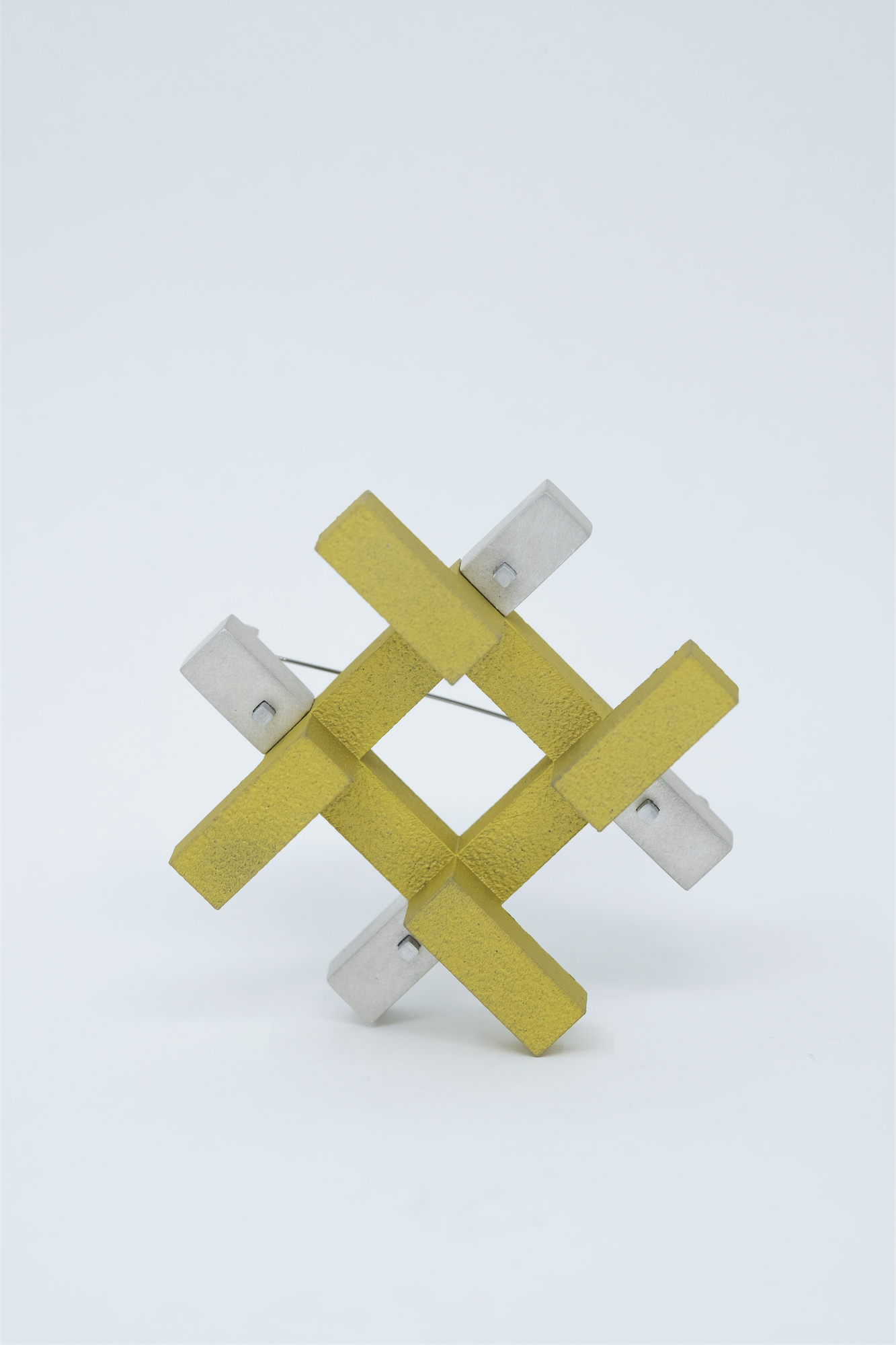
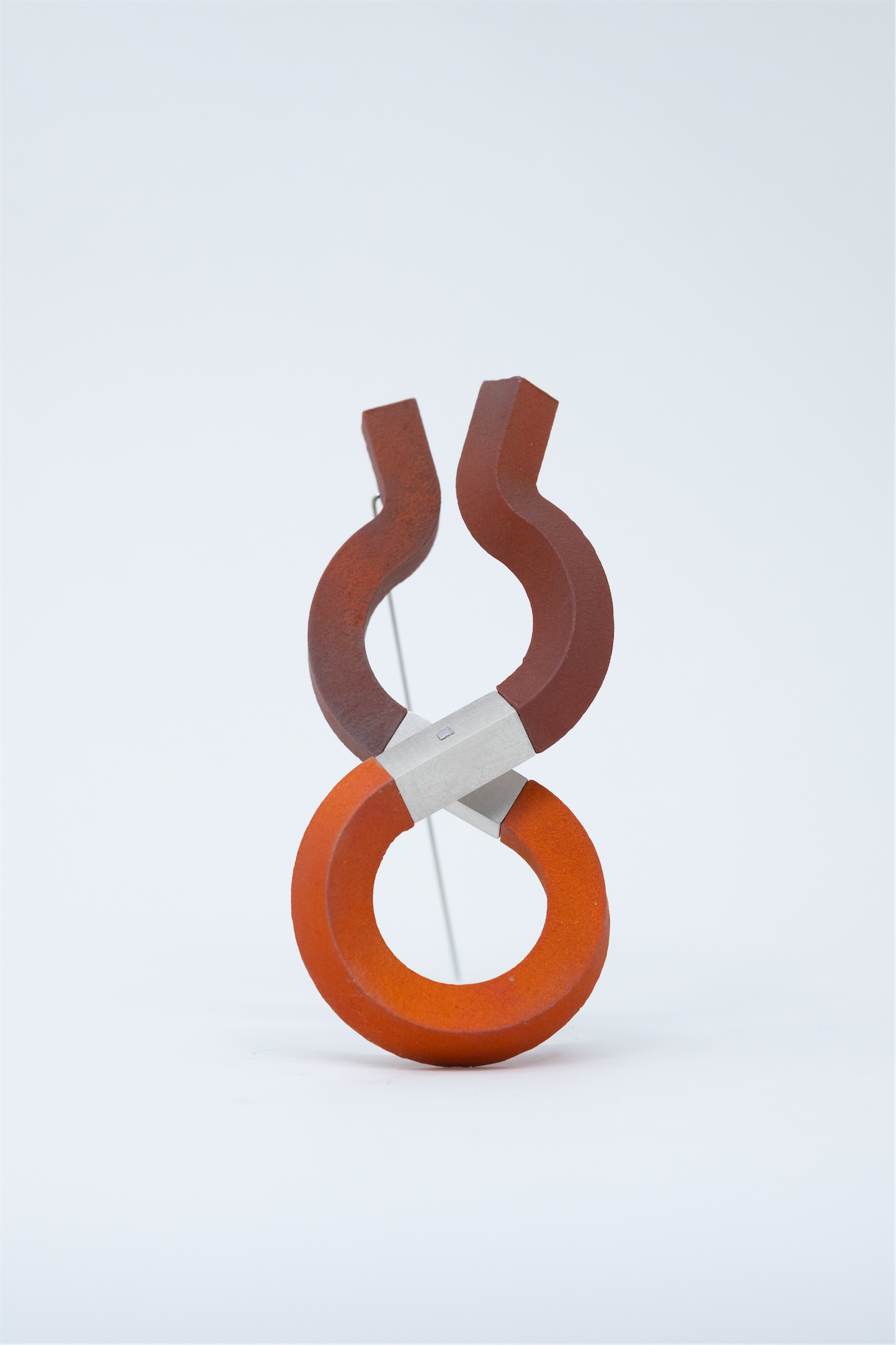
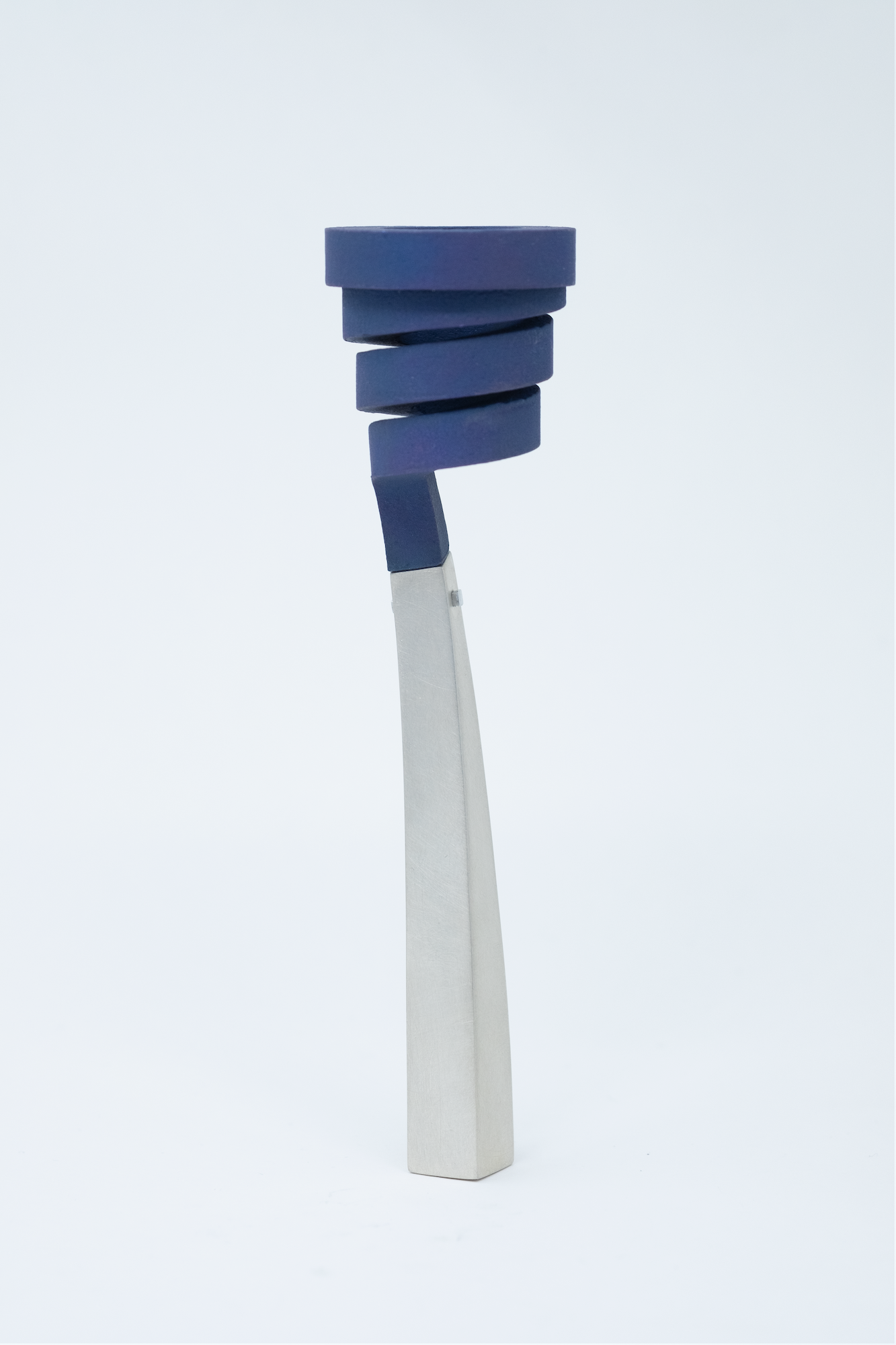
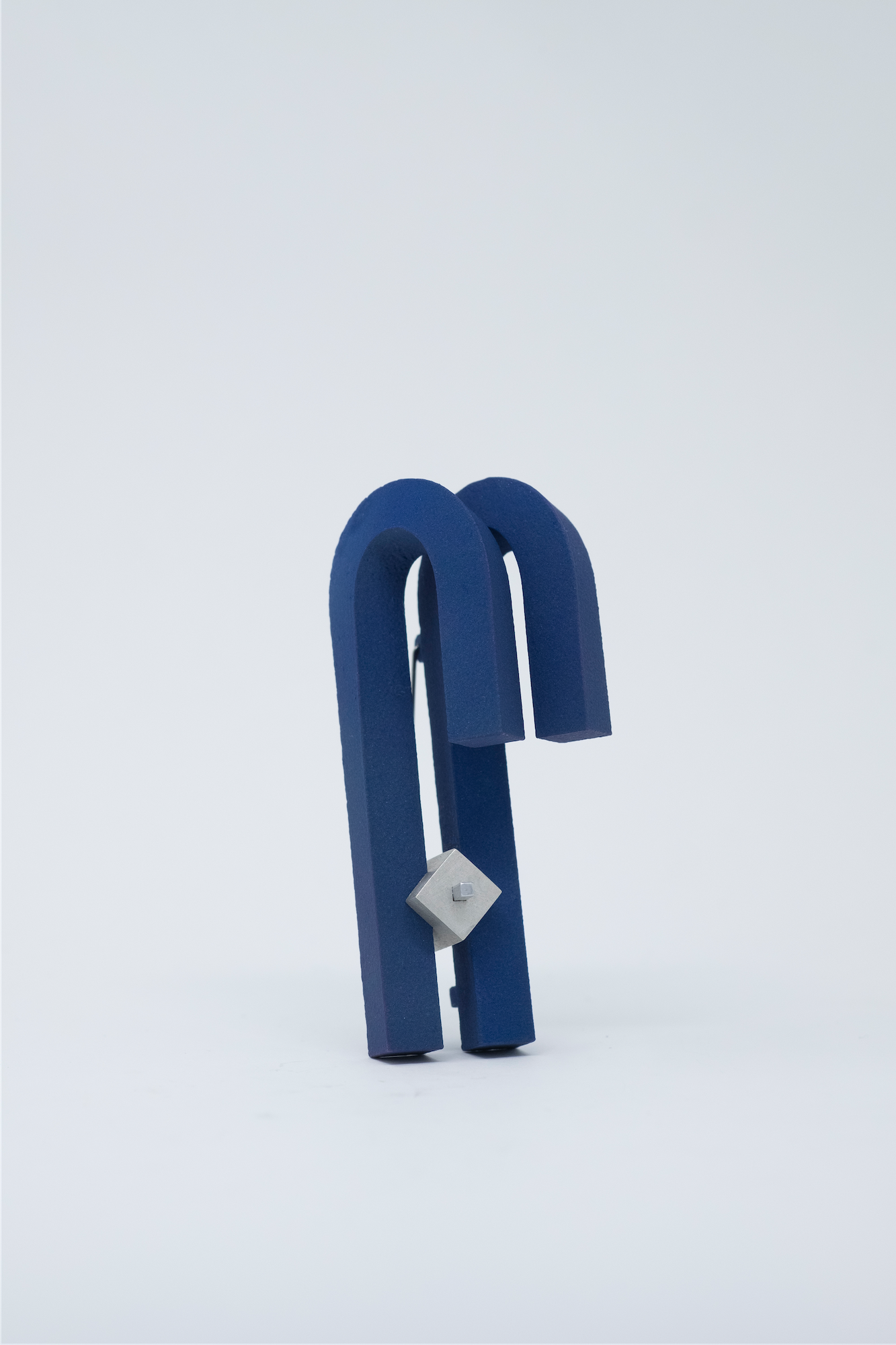
This series takes equipment structures and dynamic moments from my work environment as prototypes. Each piece reflects the interaction between maker and craft, bringing often-overlooked processes hidden behind finished works into view through material dialogue, while exploring the symbiotic relationship between traditional and modern craftsmanship. The silver components represent traditional craftsmanship accumulated within professional fields, carrying conservative yet stable force. The low-saturation-colored parts represent new technological production methods. In modern society, emerging industrial technologies continuously challenge traditional handicrafts. This work, however, refuses to position old and new crafts in opposition, instead seeking symbiotic space where allowing each to find their voice through interwoven integration. The two components create contrast between materials and forming methods, constructing a unique symbolic system that demonstrates the intersection of handicraft and industrialization, collectively forming a visual archive of craft evolution.