Kung-Hsuan Chang - UK
Kung-Hsuan Chang
Designer biography:
Kung-Hsuan Chang is a jewelry designer whose work explores the evolving relationship between humans and the environments they inhabit. By transforming emotions, memories, and narratives into wearable forms, Chang seeks to make intangible experiences physically present.
Through wearable objects, she constructs artificial ecosystems that reference plants, insects, animals, and biological processes. These works question how life is perceived, preserved, and represented. Experimenting across a wide range of materials, she creates miniature narratives that are translated into jewelry. Each piece captures moments of growth, transformation, and decay, suspending them in time and inviting reflection through intimate, wearable forms. Ultimately, Kung-Hsuan Chang’s work invites viewers to reconsider their connection to the natural world and the small, often overlooked moments in life, using jewelry as a medium to preserve fleeting states of existence and to reflect on the fragile, evolving nature of life.
Collection concept:
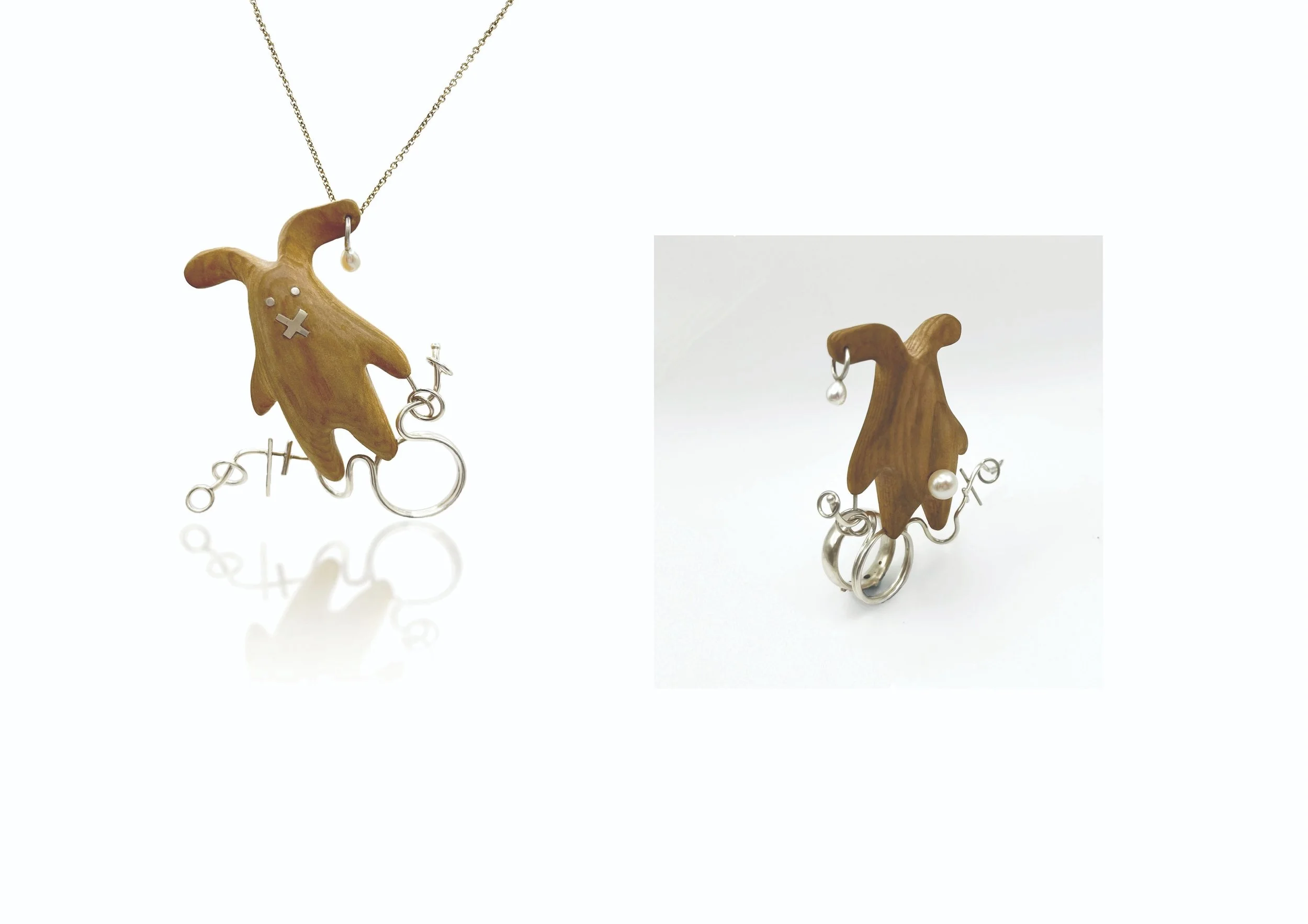
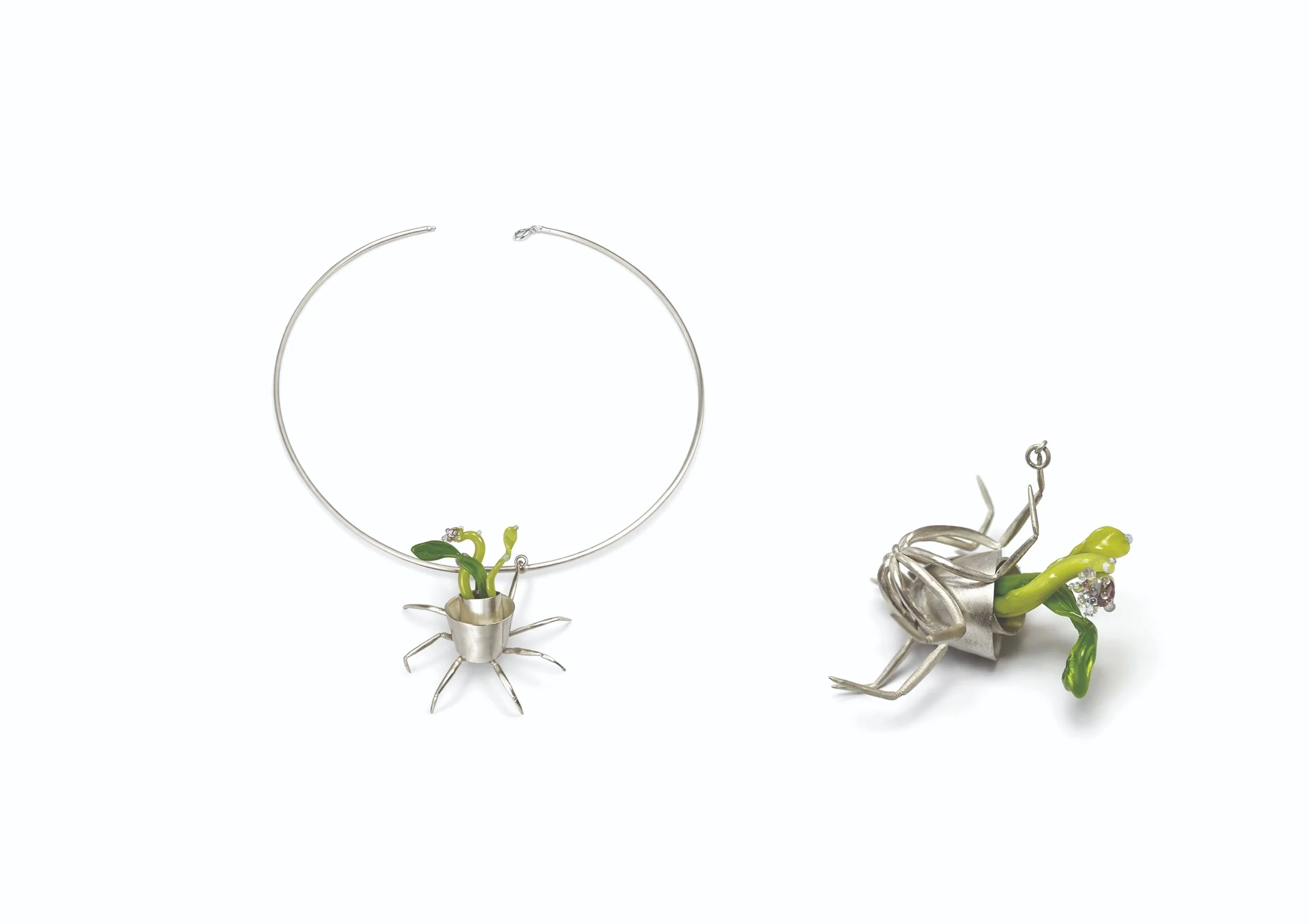
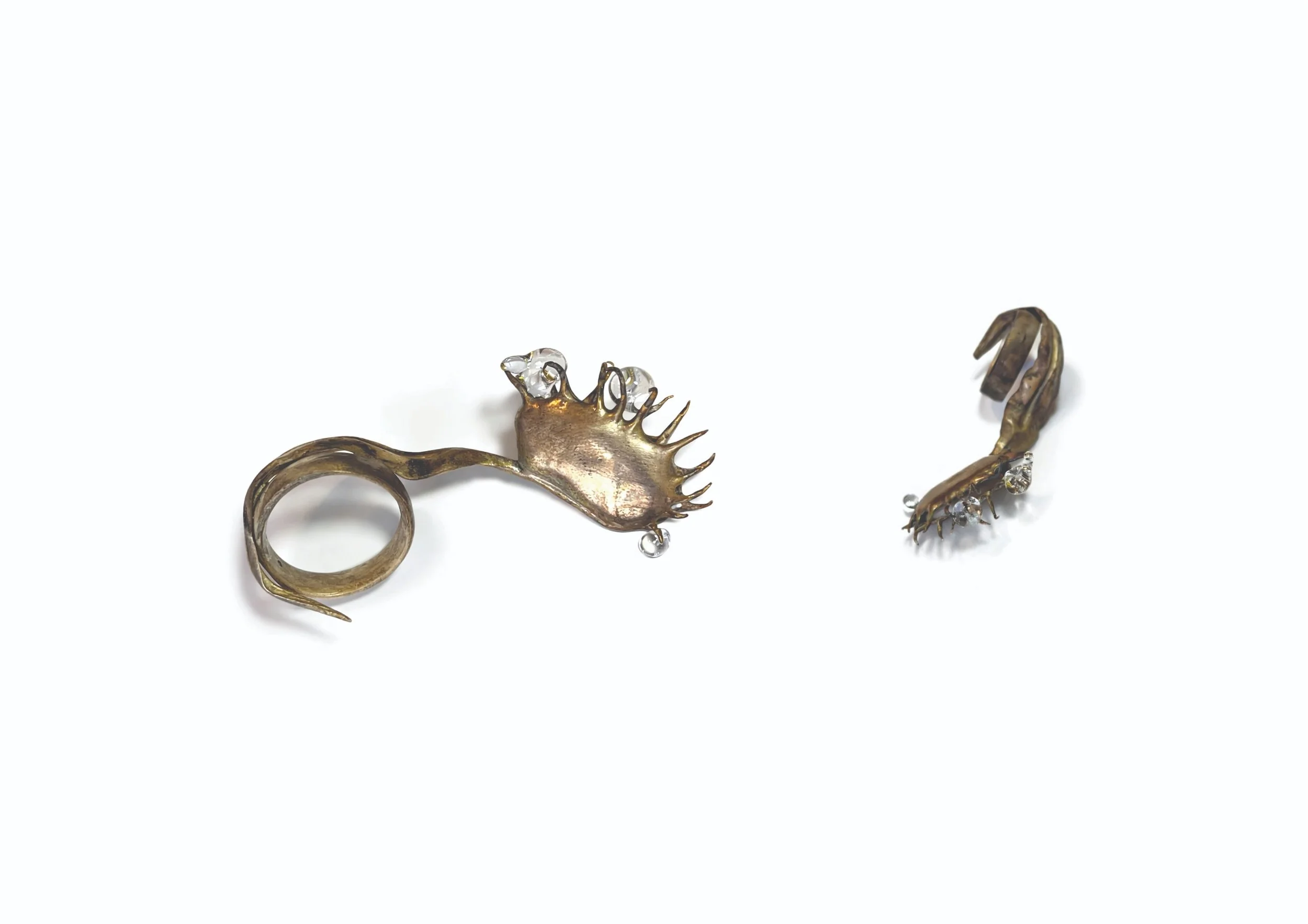
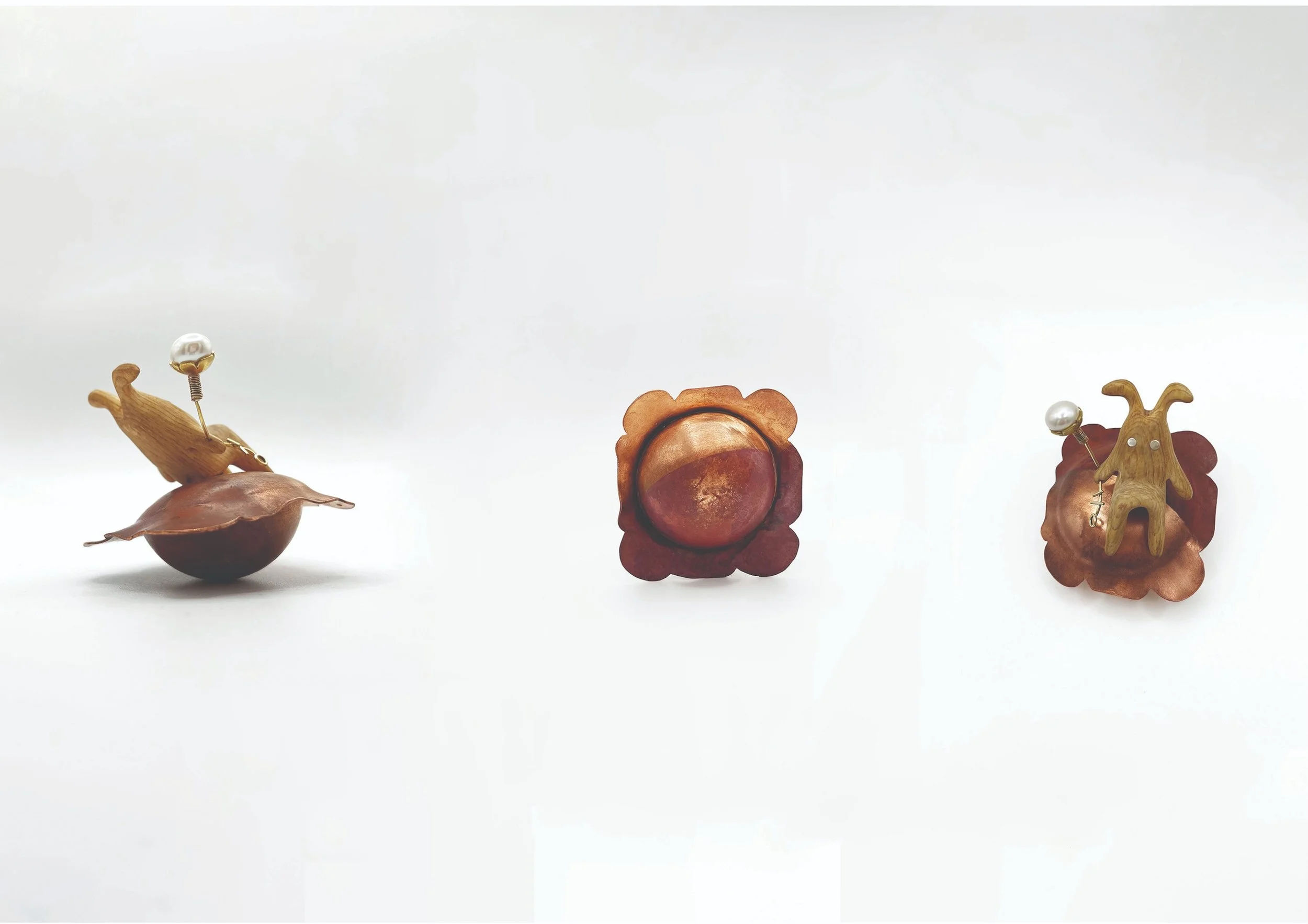
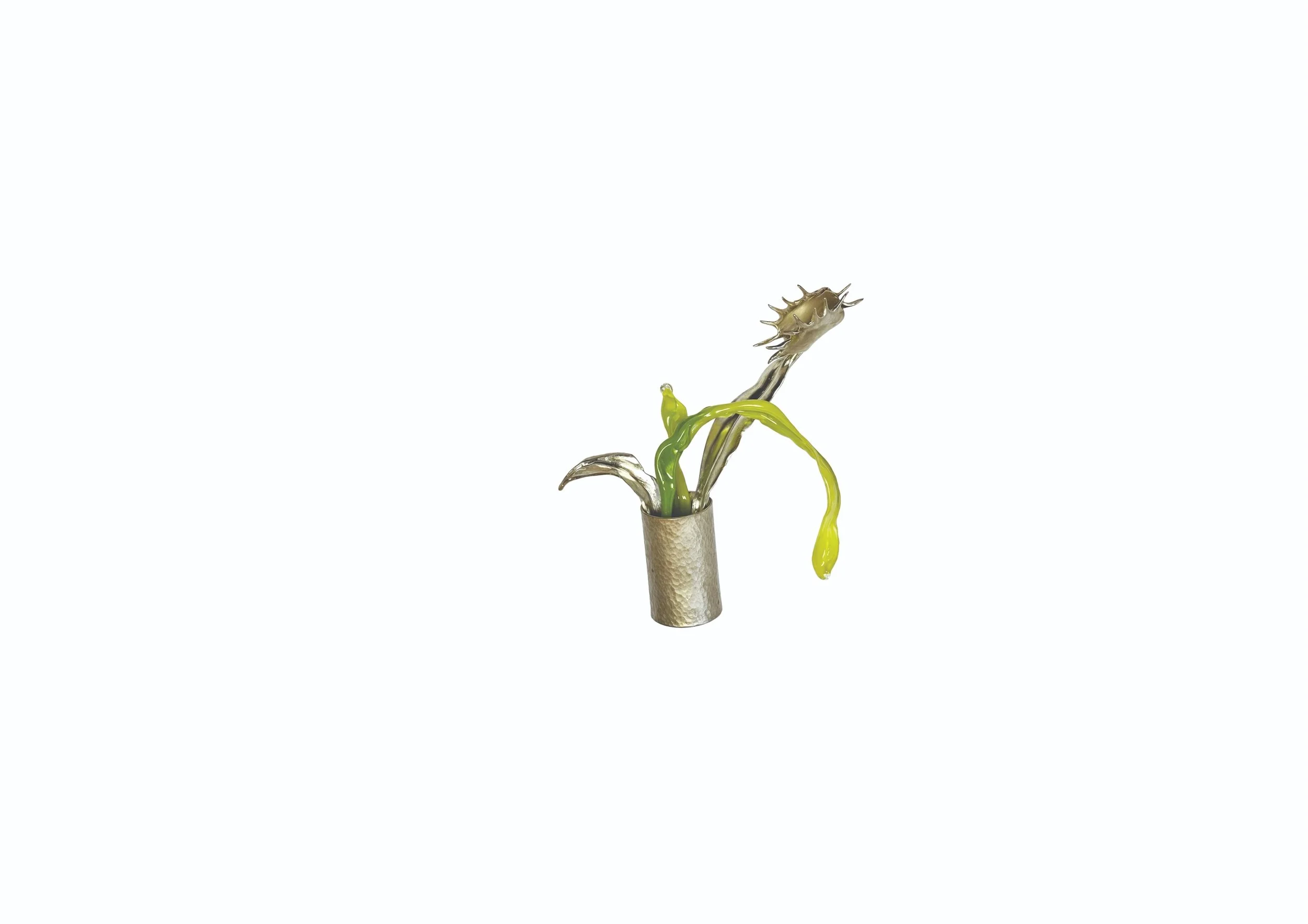
This series transforms jewelry into wearable miniature potted ecosystems. These works function like commemorative badges, marking a distance—a condition in which humans can no longer directly participate in ecological systems, and can only approach nature through reconstruction and display. As humans gradually detach from the operations of the food chain, our relationship with nature becomes fractured. We no longer possess biological instincts such as predation or camouflage, and are unable to truly participate in these ecological mechanisms. Instead, nature increasingly exists in our lives as something to be observed and managed. Perhaps only through death and decomposition can humans re-enter this cycle. Carnivorous plants, insect eggs, and fragmented body parts within the works suggest processes of predation, growth, and decay; however, these processes are fixed in time and no longer in motion. These suspended micro-ecosystems reveal both the potential of life and the brutality that accompanies it. Across the series, the first two pieces present ecological systems in which the human is absent. In contrast, the final work introduces the human body—though only in a transformed state. The carnivorous plant is shaped into a ring that wraps around the finger, appearing as an extension of the body, as if it were growing from within it. This gesture suggests that humans may only re-enter ecological cycles through transformation, no longer as themselves, but as matter reabsorbed into the system. By wearing these pieces, I attempt, through artificial means, to commemorate a world in which we can no longer participate.